
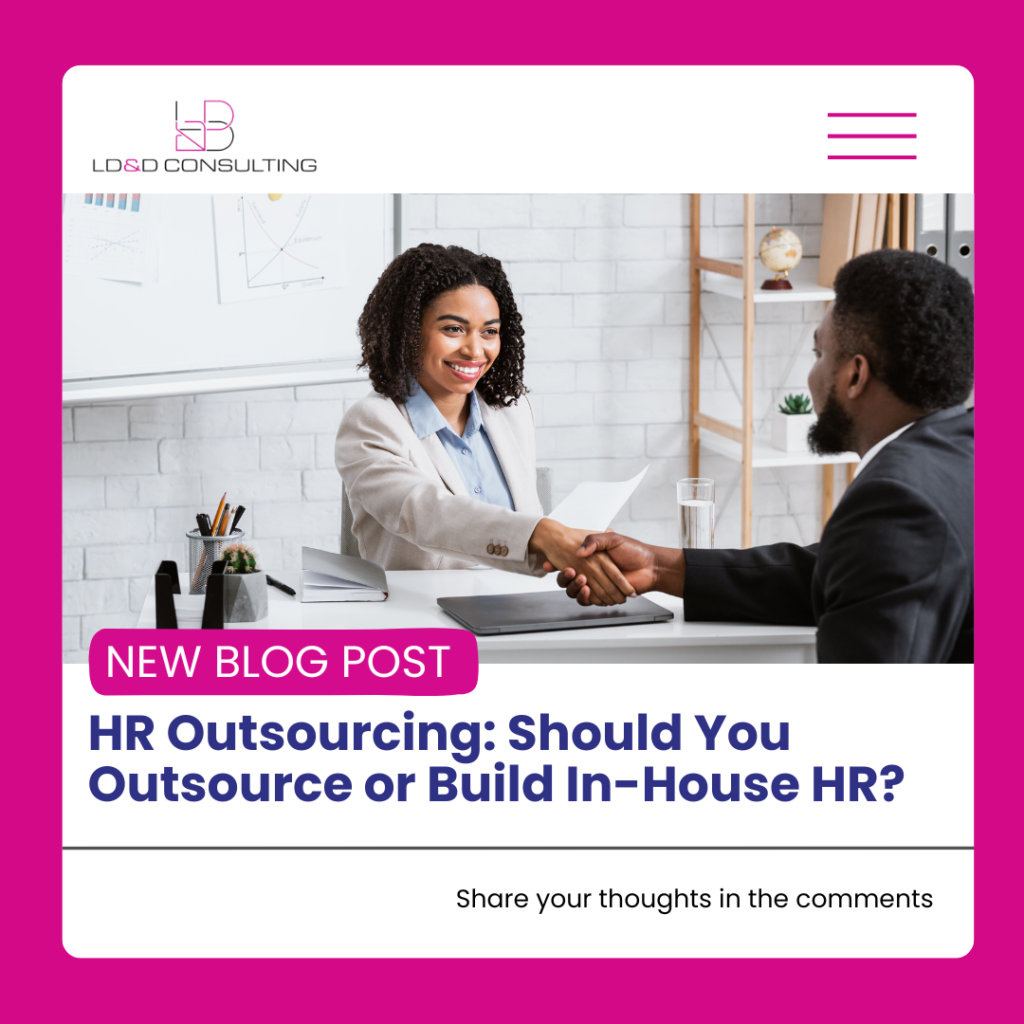
If you are running a growing business in Nigeria, at some point, you will face this question: Do I hire a dedicated HR person, or do I outsource HR entirely? Most founders either rush into building an in-house team before they are ready or they ignore HR altogether until something goes wrong. Both are expensive mistakes.
Here is the truth: there is no universal right answer. But there is a right answer for where your business is right now. And if you understand the real difference between HR outsourcing in Nigeria and building in-house HR, you will be far better positioned to make a decision that actually serves your growth, not just your budget, and not just what feels comfortable.
This guide breaks it all down. By the time you finish reading, you will know exactly what each option involves, what it truly costs, and which one makes the most sense for a business like yours.
First, let us be clear about what HR actually covers.
A lot of business owners think HR is just about hiring and firing. Here is the reality: human resources is one of the most complex functions in any organisation. Done properly, it covers:
- Recruitment and onboarding
- Employment contracts and offer letters
- Payroll processing and tax compliance (PAYE, pension, NHF)
- Performance management and appraisals
- Staff disciplinary processes and grievance handling
- Labour law compliance and regulatory reporting
- Employee records management
- Learning and development
- Exit management and offboarding
That is a full-time role or, in larger organisations, an entire department. When you understand the scope, the real question shifts from “HR person or no HR person” to: who is best placed to handle this for my business right now?
What is HR Outsourcing, Exactly?
HR outsourcing means contracting a professional HR firm or consultant to manage some or all of your HR functions on your behalf. Depending on the provider, this can range from payroll management only or all the way to a fully managed HR service that handles everything from recruitment to compliance.
It is not the same as hiring a freelancer for one-off tasks. A credible HR outsourcing provider in Nigeria operates as an extension of your business, providing you with access to experienced HR professionals, proven processes, and compliance expertise, all without the overhead of full-time staff.
A good HR outsourcing partner does not just handle your admin. They protect your business, reduce your risk, and free you up to focus on growth.
This is particularly valuable in the Nigerian business environment, where employment law, pension administration, and tax regulations are frequently updated and unevenly enforced. Getting it wrong is not just embarrassing; it can be legally and financially damaging.
What does Building In-House HR Actually Look Like?
Building an in-house HR function means hiring one or more dedicated HR staff members as permanent employees in your organisation. They work exclusively for your business, are embedded in your culture, and are available to your team daily.
For many companies, this feels like the natural progression. It can signal to staff that the business is maturing. And done well, an in-house HR team can build deep cultural alignment, respond faster to internal crises, and develop institutional knowledge that no outsider can replicate.
But here is what most business owners underestimate: the real cost of in-house HR is not just the salary. It includes:
- Monthly gross salary (junior HR Officer: ₦250,000–₦400,000; HR Manager: ₦400,000–₦800,000+)
- Employer pension contributions (10% of basic salary)
- Leave allowances, 13th-month pay, and other statutory benefits
- HR software subscriptions (payroll tools, HRIS platforms)
- Training and professional development
- The time cost of managing, onboarding, and supporting that staff member
When you add it all up, a single mid-level in-house HR hire can cost your business between ₦6 million and ₦10 million per year in total employment cost. Before you can derive value from them, you also need to factor in setup time; finding the right person alone can take anywhere from one to three months.
HR Outsourcing vs In-house HR
| Factor | In-House HR | HR Outsourcing |
| Upfront cost | High (salaries, tools, setup) | Lower (service fee model) |
| Speed to start | Slow (weeks to months) | Fast (days to weeks) |
| Legal compliance | Depends on staff quality | Built-in expertise |
| Scalability | Harder — tied to headcount | Scales up or down easily |
| Culture building | Strong — team is present daily | Lighter touch |
| Best for | 50+ staff, complex structure | Under 50 staff, growth phase |
The table above is a starting point, not a verdict. Your decision depends on factors that are specific to your business: your size, your industry, your growth stage, and how complex your people management needs already are.
When HR Outsourcing Makes the Most Sense
HR outsourcing is not a shortcut or a compromise. For most growing Nigerian businesses, it is actually the smarter structural choice. Here is when it makes the most sense:
1. Your business has fewer than 50 employees:
At this stage, the volume and complexity of HR work do not justify a full-time hire. You need professional HR support, but not 40 hours a week of it. Outsourcing gives you exactly what you need; no more, no less.
2. You are in a high-growth phase:
Growth is exciting. It is also chaotic. When your headcount is doubling or tripling, the last thing you want is to be rebuilding your HR structure at the same time. An outsourced HR partner can scale with you without the delay or cost of hiring, training, and integrating new HR staff.
3. Compliance is keeping you up at night:
If you are not 100% confident about your PAYE remittances, your pension compliance, or your employee contracts, you are carrying risk. A professional HR outsourcing firm will ensure your business stays on the right side of every regulation and will flag issues before they become problems.
4. You have experienced a painful HR mistake:
A wrongful termination claim. An underpaid team member. A missed regulatory deadline. If your business has already had a brush with HR going wrong, outsourcing is often the fastest path to getting the function properly structured.
5. You need recruitment support, but not a full-time recruiter:
Recruitment is one of the most time-intensive parts of HR. If you hire often enough to need consistent support but not enough to justify a full-time recruiter on your payroll, HR outsourcing that includes recruitment services is a highly practical option.
Real talk for founders:
Many business owners outsource HR early, then bring it in-house once they cross 50 to 80 employees and have a strong enough culture and process foundation to support it. That is not failure, that is smart staging.
When Building In-house HR Makes More Sense
There are situations where investing in an in-house HR team is the right call. Here is when to consider it seriously:
1. Your business has complex, specialised people needs:
If you are in a highly regulated industry: financial services, healthcare, or oil and gas, where HR intersects with technical compliance at every turn, having someone embedded in the business daily may justify the investment.
2. You have 50 or more employees, and you are no longer growing rapidly:
At scale, the economics shift. With 60 to 80+ employees, a competent in-house HR manager can handle enough volume to justify their cost, especially if your workforce is stable and your processes are already defined.
3. Culture is your competitive advantage:
Some businesses, particularly consumer brands, media companies, and creative agencies, compete heavily on culture. In these cases, an HR leader who is deeply embedded in the business, building culture from the inside, can create strategic value that an outsourced firm would struggle to replicate.
4. You have had a bad outsourcing experience:
Not all HR outsourcing providers in Nigeria are equal. If you have worked with a firm that was unresponsive, generic, or unreliable, it is understandable to want control brought back in-house. The answer here is not necessarily in-house HR — it may be finding a better outsourcing partner. But if control matters more than cost, building in-house may be right for you.
The Hybrid Model: A Third Option Most Businesses Miss
Here is something a lot of Nigerian business owners do not realise: it does not have to be one or the other.
Many growing businesses operate a hybrid model; they hire one generalist HR coordinator in-house to handle day-to-day culture, team engagement, and immediate staff needs, while outsourcing the technical and compliance-heavy functions: payroll processing, background checks, recruitment, and regulatory reporting.
This approach gives you the best of both. You have a human face for HR in your building, and you have professional infrastructure behind the scenes. For businesses between 30 and 80 employees navigating active growth, this is often the most practical structure available.
The question is never “can I afford to outsource HR?’ The real question is: can you afford not to have proper HR support at all?”
What to Look for in an HR Outsourcing Partner
If you decide that HR outsourcing is the right path for your business, choosing the right partner matters enormously. Here is what to look for:
- Proven compliance knowledge. They should be able to speak confidently about PAYE, pension (PFA remittances), NHF, and the Nigerian Labour Act without you having to prompt them.
- Clear service scope. Know exactly what is included in your engagement. A good provider will walk you through their deliverables in detail, not leave you guessing.
- Technology and reporting. Do they use proper payroll and HR software? Can they give you reports and records when you need them? Manual spreadsheet-based operations are a red flag.
- Responsiveness. HR issues do not keep office hours. Make sure your provider has clear SLAs and a responsive point of contact.
- References from similar businesses. Ask for clients in similar industries or at similar growth stages. A firm that works well with a 200-person corporation may not be the right fit for a 25-person startup.
Final thoughts
Here is the truth about HR outsourcing: the businesses that get it right are not the ones that spend the most. They are the ones who are honest about where they are, what they actually need, and what level of HR support their business can truly leverage right now.
If you are under 50 employees, growing fast, and stretched thin, outsourcing is almost certainly the smarter move.
If you are scaling steadily, your processes are defined, and you need deep cultural integration, building in-house becomes more compelling.
And if you are still unsure? That is completely fine. The most important step is not choosing the perfect model on paper. It is making sure your people function is not being run on guesswork, goodwill, and WhatsApp messages.
Here is your challenge today:
Take 30 minutes this week to audit your current HR setup. Write down every HR task your business is handling right now and be honest about how well it is actually being done. That list will tell you everything you need to know about whether it is time to get proper support.
We are rooting for your business.
Precious Omobobola
March 17, 2026Truly, outsourcing makes more sense
Adetutu
March 17, 2026Right on track! Outsourcing is the real deal…